PHANMEMBENHVIEN.NET
- Backed by a team of healthcare operations and clinical workflow consultants and analysts from leading private and public hospitals.
- Experienced development team with many years in healthcare information systems, from analysis and design to deployment and support.
- Benchmarking and learning from existing Vietnamese hospital management software and international Hospital Information Systems.
- Clinical advisory board of senior specialists working in central hospitals and partner hospitals.
- Use of modern, web-based technologies to build a robust, scalable, future-proof HIS platform.

SALES & DEPLOYMENT PARTNERS FOR HIS-AIO
Total number of units deployed: more than 30 HIS-AIO systems
In there:
- Coverage deployed across provinces and cities in the North, Central, and South regions.;
- Implemented in both public hospitals and private hospitals;
- 6 units operating under a hospital chain model with extended clinic networks;
- 4 units operating as multi-specialty clinic chains;
- 3 units specializing in early cancer screening:
+ Bernard International Advanced Medical System [Ningen Dock standard];
+ TOMEC High-Tech Medical Center;
+ 1 unit operating under remote healthcare management and telehealth model;
- 20+ units operating as general and specialty clinics.
Representative Customers & Typical Deployment Models
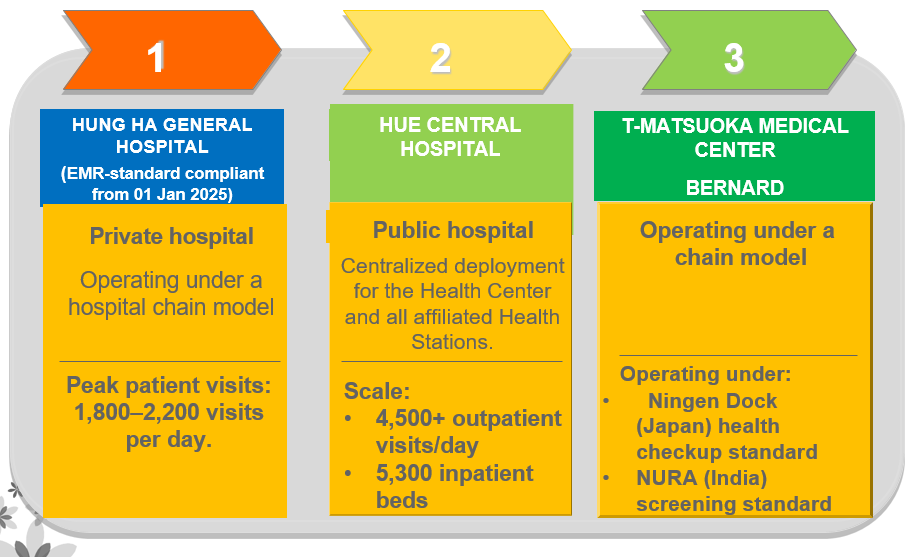
Partners that have implemented the HIS-AIO integrated management solution


Overview of the HIS-AIO Hospital Information System
- A comprehensive Hospital Information System (HIS) deployed on a web-based and mobile platform…
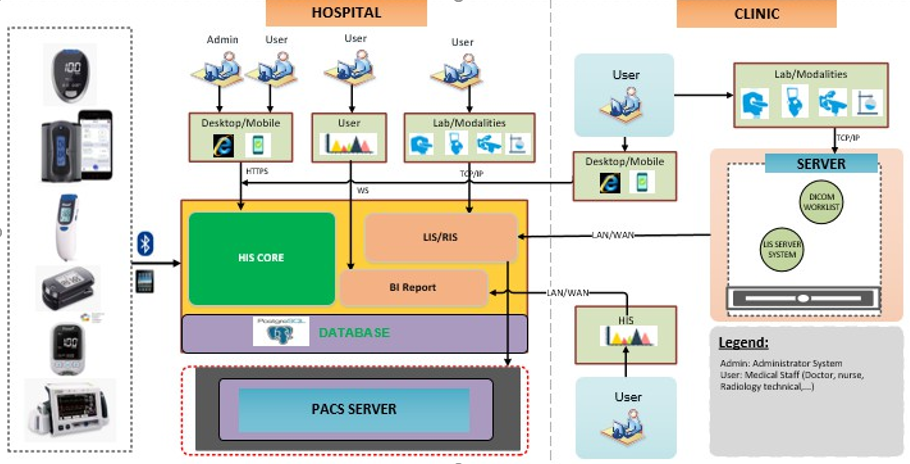
- Supports centralised, multi-site management (multisite) and bilingual operation (Local–EN)
- Provides tightly integrated, end-to-end workflows with high interoperability, scalability and flexible configuration, supporting high concurrent access and optimising hospital operations while meeting patient-safety and operational-safety standards.
- The system supports fast access for a large number of concurrent users and high data volume, optimising operations and improving work efficiency.
- The system provides flexible, secure data backup, ensuring information security, privacy, and proper data access rights.
- Its Electronic Medical Record (EMR) solution has been appraised and announced by 4 independent assessment bodies
- Outpatient, emergency and chronic disease management.
- Inpatient management and treatment module.
- Health checkup management module (corporate checkups, walk-in checkups, package-based services, insured patients).
- Pharmacy, consumables and office-supplies management module.
- Paraclinical services management module (Laboratory – Diagnostic Imaging – Functional Exploration).
- Nutrition and dietetics management module
- Medical records and Electronic Medical Records (EMR) management module.
- Fixed-asset management module.
- Centralised procurement management module.
- Financial accounting and management reporting / analytics module.
- Administration, HR and payroll management module
- Document, task assignment and work-reporting management module
- Customer relationship and patient-care management module
- Incident management, scientific research and auxiliary retail services management module(hospital retail / convenience store, canteen, meal services, minibar, etc.)
- Service catalogue, master data, system administration and configuration module
- Device connectivity and integration management module(vital-sign monitors, LIS/RIS, Diagnostic Imaging and PACS, etc.)
- Notification system (NotifySystem) supporting SMS and Email
- Other extended modules (KIOS, mobile, etc.)
Key Benefits of the HIS-AIO Solution
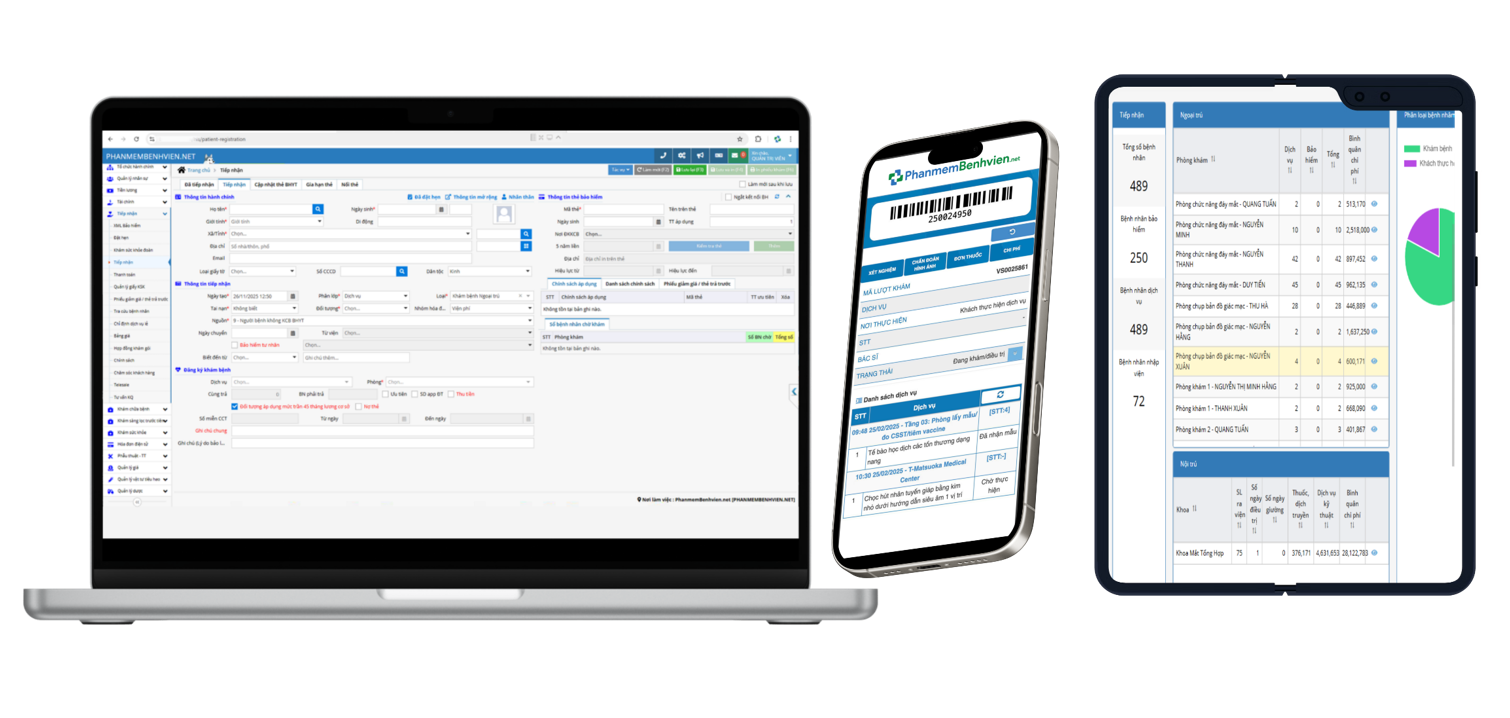
1. Deploy a comprehensive, fully integrated solution for healthcare facilities on a web-based platform (deployable on Cloud), helping reduce implementation time and save on infrastructure, installation, and future upgrade costs.
2. Support the development of a paperless hospital model
- Fully utilize electronic medical records (EMR)
- Enable hospitals to migrate paper-based data to a digital system, reducing waste and accelerating information processing.
- Application of e-Signature & biometric authentication
- Patients can sign medical documents using digital signatures, fingerprints, or facial recognition, saving time and ensuring data security.
- Automated check-in via facial recognition (smart kiosks similar to HDBank/BIDV)
- Patients no longer need to queue for registration; they simply scan their national ID card and use facial recognition to check in at the hospital.
- Cashless hospital – dynamic QR payments
- Integrate cashless payment methods so patients can pay using cards, QR codes (dynamic QR), or e-wallets instead of cash
- Integration with intelligent medical record storage & retrieval systems
- Enable hospitals to look up medical records within seconds, without manual paper searching. Minimize errors and ensure data is always accurate and up to date.
3. Flexible integration with external systems: Social Insurance (BHXH), e-invoicing, national
- e-prescription platform, accounting systems, VNeID and other national platforms.
- Supports Digital Hospital / Smart Hospital models by integrating IoT-enabled medical devices, improving operational efficiency, care quality and reducing clinical errors.
- Telemedicine capabilities: supports remote consultation and specialist teleconsultation, enabling hospitals to expand their service reach.
- Assists in auditing and reviewing clinical services to minimise staff errors, in line with social-insurance review requirements.
- Clinical safety alerts: the HIS can detect high-risk drug–drug interactions and warn of potential treatment errors.
- Digital signatures and e-contracts help reduce paperwork and accelerate approval and contracting processes.

4. Deploy a solution that enables patients to look up information, book appointments, and receive and share their medical examination results online.
- Patient app and online portal: allows patients to book appointments, view laboratory and imaging results and manage their own health information.
- Reduced waiting time: web-based tools and QR-code tracking let patients monitor the status of their services and test processing in real time.
- Feedback and service-rating system: collects patient feedback to continuously improve service quality and patient experience.
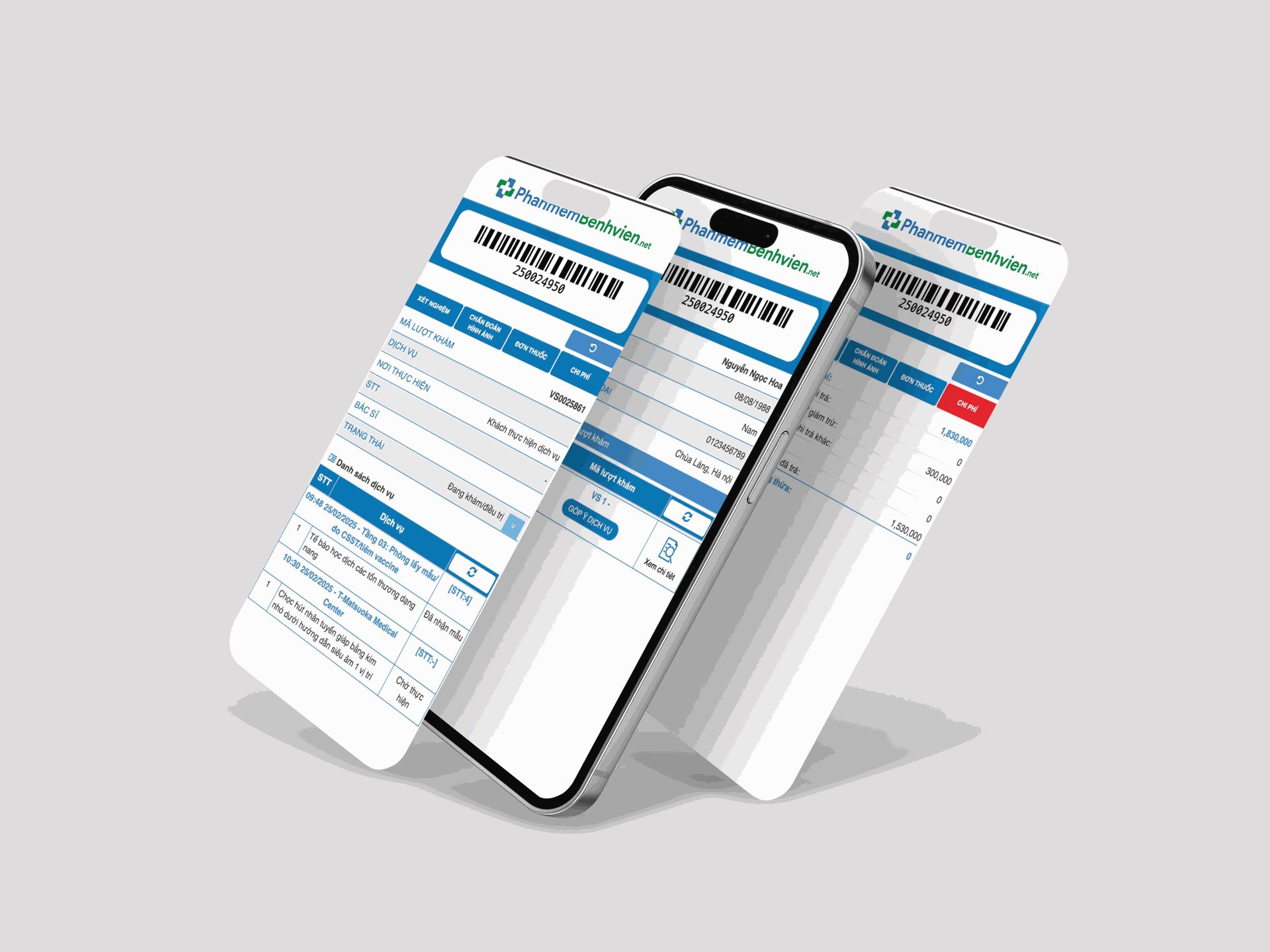
5. Optimize operational workflows, synchronize patient data and visit history
- Improve the productivity of healthcare staff by enabling doctors and nurses to quickly access and retrieve electronic medical records (EMR), e-prescriptions, etc.
- Support clinicians in reviewing and cross-checking patients’ medical histories and comparing previous paraclinical / ancillary test results performed at the facility.
- Shorten the time needed to complete medical records by allowing the system to assist medical staff in creating examination templates, care pathways, prescription sets, order sets, result templates, sample medical records, nursing care sheets, and more.
6. Optimize infrastructure deployment and operating costs (up to one-third savings compared with implementing other HIS solutions)
- Open architecture that is easy to upgrade, scale, and integrate; flexible to adapt to future changes and to extend with additional modules when needed.
- Reduce deployment and infrastructure costs: a cloud-based HIS helps save on server investment and system maintenance.
- Increase automation: reduce paperwork and streamline workflows to save manpower and office supply costs.